GarageBand turns your iPad into a collection of Touch Instruments and a full-featured recording studio — so you can make music anywhere you go. Use Multi-Touch gestures to play pianos, organs, guitars, drums, and basses on your iPad. They sound and play like their counterparts, but let you do things you could never do on a real instrument.
Download: GarageBand 1.0 for IPAD
Samsung Google Nexus S
This is the second child to Google, the second Nexus, and this time around Google cooperated with Samsung. The first Nexus was with HTC.
What upgrade does this second Nexus giving us? Well, upgrade is the right word for it, but unfortunately is not the kind we celebrated. Why? We don’t see new impressive features in this second Nexus, only the upgraded versions of previous ones.
But that should not be the reason for us to turn our face against it. This is still a great phone. Based on Samsung Galaxy S as its prototype — even the hardware specifications are the same—, and with optimized Android 2.3 Gingerbread as its operating system, the phone feels more powerful than the Samsung Galaxy S, which makes us speculated that the S in the name— Samsung Google Nexus S— could also means Superior.
The most noticeable superior thing in this phone is its Super Amoled 4” Contour Display with curved glass screen and 480×800 pixels resolution (WVGA). With this design, viewing angles are so impressive. The contrast are remarkable, even under direct sunlight. The capacitive touchscreen is impressive, and working on it with just one hand is enjoyable. Not to mention that the phone fits nicely in the hand’s grip.
On the inside, Google uses new file system, Ext4, which boosts performances and added more excitement to the Android 2.3 Gingerbread operating system. A powerful 1 GHz ARM Cortex A-8 (code name Hummingbird) is sure enough for applications to operate at full speed. Here is the specification list :
Key features:
• Quad-band GSM and tri-band 3G support
• HSDPA, 7.2 Mbps; HSUPA, 5.76 Mbps
• 4.0″ WVGA (480×800) Super AMOLED Contour Display with curved glass screen
• Android OS, v2.3 Gingerbread
• 1 GHz ARM Cortex-A8 (Hummingbird) processor
• 16GB storage, 512 MB RAM
• 5 MP autofocus camera with LED flash and geotagging
• Front-facing VGA camera
• Wi-Fi b/g/n with DLNA
• GPS with A-GPS
• Portable Wi-Fi hotspot and stereo Bluetooth v2.1
• Near Field Communication chip
• Accelerometer, proximity and light sensors
• Standard 3.5 mm audio jack
• microUSB port (charging)
• Adobe Flash support out of the box
• Latest Google Mobile apps
Main disadvantages:
• No microSD slot
• No 720p video recording
• All-plastic body, fingerprint magnet
• No DivX and XviD support (no actual video player) out of the box
• No dedicated camera key and no lens cover
• No FM radio
• No smart dialing
• Overly expensive for its feature set
LG Optimus 2X
What feature that started by computer and gaming console and not yet popular with mobile devices? Dual core. And here now we have LG Optimus 2X. The trailing 2X does mean that this powerful handphone has dual core processors in its system. But that’s not the only key feature that this cellphone sells.
Is it the camera? Well, the ability to record Full HD video at 1080@24fps and 720@30fps, and an 8MP autofocus camera with LED flash and geotagging does make LG Optimus 2X a gadget everyone loves, but there is other thing.
Using ULP GeForce GPU with Tegra 2 chipset, the graphic engine embedded inside this mobile promises you wonderful graphical experience. The 4” capacitive IPS LCD touchscreen is one of the largest display you’ll ever want from a cellular, with WVGA resolution, 480 x 800 pixels, supporting 16 millions colors.
Key features:
* Quad-band GSM and dual-band 3G support
* 10.2 Mbps HSDPA and 5.76 Mbps HSUPA
* 4.0″ 16M-color capacitive IPS LCD touchscreen of WVGA resolution (480 x 800 pixels)
* Android OS v2.2 Froyo with LG Home launcher
* Dual-core 1GHz ARM Cortex-A9 proccessor, ULP GeForce GPU, Tegra 2 chipset
* 512 MB RAM
* 8 MP autofocus camera with LED flash and geotagging
* 1080p video recording @ 24fps, 720p@30fps
* 1.3 MP front-facing camera with videocalls
* Wi-Fi b/g/n and DLNA
* GPS with A-GPS, digital compass
* 8GB internal storage and microSDslot for up to 32GB cards
* Accelerometer, gyroscope, and proximity sensor
* microHDMI port with HDMI mirroring
* Standard 3.5 mm audio jack
* Stereo FM radio with RDS
* microUSB port (charging) and stereo Bluetooth v2.1
* Smart dialing, voice dialing
* DivX/XviD video support
* Innovative gesture controls
* Adobe Flash 10.1 support
* Dolby Mobile and SRS sound enhancement
Disadvantages:
There are also some disadvantages of LG Optimus 2X. But they are mainly just minor disappointment for general usage.
* Despite similar technology LCD isn’t quite as impressive as the iPhone4 screen
* No dedicated camera key and no lens cover
* 1080p recording isn’t well polished
* No Android 2.3 Gingerbread at launch
* Audio quality is only average
* Below average speaker loudness
Is it the camera? Well, the ability to record Full HD video at 1080@24fps and 720@30fps, and an 8MP autofocus camera with LED flash and geotagging does make LG Optimus 2X a gadget everyone loves, but there is other thing.
Using ULP GeForce GPU with Tegra 2 chipset, the graphic engine embedded inside this mobile promises you wonderful graphical experience. The 4” capacitive IPS LCD touchscreen is one of the largest display you’ll ever want from a cellular, with WVGA resolution, 480 x 800 pixels, supporting 16 millions colors.
Key features:
* Quad-band GSM and dual-band 3G support
* 10.2 Mbps HSDPA and 5.76 Mbps HSUPA
* 4.0″ 16M-color capacitive IPS LCD touchscreen of WVGA resolution (480 x 800 pixels)
* Android OS v2.2 Froyo with LG Home launcher
* Dual-core 1GHz ARM Cortex-A9 proccessor, ULP GeForce GPU, Tegra 2 chipset
* 512 MB RAM
* 8 MP autofocus camera with LED flash and geotagging
* 1080p video recording @ 24fps, 720p@30fps
* 1.3 MP front-facing camera with videocalls
* Wi-Fi b/g/n and DLNA
* GPS with A-GPS, digital compass
* 8GB internal storage and microSDslot for up to 32GB cards
* Accelerometer, gyroscope, and proximity sensor
* microHDMI port with HDMI mirroring
* Standard 3.5 mm audio jack
* Stereo FM radio with RDS
* microUSB port (charging) and stereo Bluetooth v2.1
* Smart dialing, voice dialing
* DivX/XviD video support
* Innovative gesture controls
* Adobe Flash 10.1 support
* Dolby Mobile and SRS sound enhancement
Disadvantages:
There are also some disadvantages of LG Optimus 2X. But they are mainly just minor disappointment for general usage.
* Despite similar technology LCD isn’t quite as impressive as the iPhone4 screen
* No dedicated camera key and no lens cover
* 1080p recording isn’t well polished
* No Android 2.3 Gingerbread at launch
* Audio quality is only average
* Below average speaker loudness
Nexian She G788 Preview
Nexian NX-G788 or Nexian She is a QWERTY keyboard phone with sliding design. Nexian NX-G788 is equipped with features like 2.0 Megapixel camera, MP3 and MP4 player, FM radio, a series of online facilities (Nexian Messenger, Facebook and chat applications). Support EDGE or GPRS network, plus a WAP browser Opera Mini and Bluetooth.
With swarovski crystal studded and features a fairly elegant and fashionable design, Nexian NX-G788 special phone that is fashionable for woman, worthy of consideration for your own.
Specifications and pricing Nexian She NX-G788
- Dual GSM 900/1800MHz
- LCD screen 2.2-inch QVGA
- MP3 Player, FM Radio
- GPRS / EDGE
- 2 Megapixel Camera
- Chatting (Nexian Messenger, IM, eBuddy, MSN, Facebook, Twitter)
- Email Client
- Voice / Audio Recorder
- Bluetooth
- Stereo Speaker
- Handsfree / External Memory
- Support Java MIDP 2.0
The price estimation of Nexian She NX-G788 is about 1,299,000 - 1,449,000 rupiah.
With swarovski crystal studded and features a fairly elegant and fashionable design, Nexian NX-G788 special phone that is fashionable for woman, worthy of consideration for your own.
Specifications and pricing Nexian She NX-G788
- Dual GSM 900/1800MHz
- LCD screen 2.2-inch QVGA
- MP3 Player, FM Radio
- GPRS / EDGE
- 2 Megapixel Camera
- Chatting (Nexian Messenger, IM, eBuddy, MSN, Facebook, Twitter)
- Email Client
- Voice / Audio Recorder
- Bluetooth
- Stereo Speaker
- Handsfree / External Memory
- Support Java MIDP 2.0
The price estimation of Nexian She NX-G788 is about 1,299,000 - 1,449,000 rupiah.
Motorola CDMA Service Codes
Motorola unlock codes are diffrent from this Motorola service codes and this Motorola codes are for CDMA phones not for Motorola GSM mobile cellular phones.
StarTAC 7760/7860 programming:
Service menu: FCN+0+000000+000000+RCL
Test mode: FCN 00**83786633 STOV60c programming:
Service menu: 74663 # [Menu] [Menu] (programming code)
Test mode: [Menu] 073887 * (security code = 000000)
Motorola Tarpon (120x)
1. Press 74663 (spells PHONE)
2. Press # MENU MENU quickly
3. Enter OTKSL
4. The work MIN will be highlighted
5. Select the word CHANGE by selecting the top right button
6. Select DELETE. Press and hold the button until clear
7. Have the customer enter the 10 digit MIN number
8. Select OK with the top right button. The “User Activation” screen will appear
9. Scroll to highlight the CDMA Sys ID
10. Select CHANGE by selecting the top right button
11. Enter SID
12. Select OK by selecting the top right button
13. Select DONE with the top left button
14. Press the END key
15. Press # MENU MENU quickly
16. Enter OTKSL
17. The work MIN will be highlighted
18. Select the word CHANGE by selecting the top right button
19. Select DELETE. Press and hold the button until clear
20. Have the customer enter the 10 digit MIN number
21. Select OK with the top right button. The “User Activation” screen will appear
22. Scroll to highlight the CDMA Sys ID
23. Select CHANGE by selecting the top right button
24. Enter SID
25. Select OK by selecting the top right button
26. Select DONE with the top left button
Press the END key
Motorola Phones (ALL)
1. Enter 74663 # FCN FCN
2. Enter OTKSL
3. Enter MIN and press STO
4. Enter SID (4654) and press STO
5. Press STO again – programming is complete
Note: on the Tarpon (120C) you will need to press the MENU key instead of FCN.
Sony Ericsson Xperia Neo and Xperia Pro Set To Go On Sale On April in Indonesia
Sony Ericsson reported set to release Xperia Neo and Xperia Pro in Indonesia. Xperia Neo and Xperia Pro set to go on sale about April, beside Xperia Arc and Xperia Play. Xperia Neo and Xperia Pro actually are the next of Vivaz and Vivaz Pro.
Sony Ericsson Xperia Pro Specifications:
Network: UMTS HSPA 900, 2100 GSM GPRS/EDGE 850, 900, 1800, 1900
Processor: 1 GHz Qualcomm Snapdragon MSM8255
OS: Google Android 2.3 Gingerbread
Dimensions:120 x 57 x 13.5 mm
Weight: 140 grams
Camera: 8MP with LED flash
Mobile BRAVIA Engine
Camera Exmor R Censor
Sony Ericsson Xperia Neo specifications:
Network: UMTS HSPA 900, 2100 GSM GPRS/EDGE 850, 900, 1800, 1900
Processor: 1 GHz Qualcomm Snapdragon MSM8255
OS: Google Android 2.3 Gingerbread
Dimensions: 116 x 57 x 13 mm
Weight: 126 grams
Camera: 8MP with LED flash
Mobile BRAVIA Engine
Camera Exmor R Censor
No price revealed about the both phones in Indonesia.
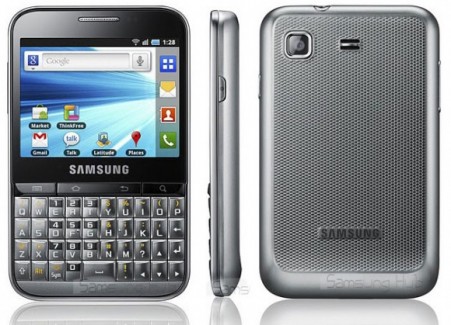
Android Smartphone Samsung Galaxy Pro 2011
Features Android Smartphone Samsung Galaxy Pro 2011
Samsung mobile add another collection of Android phone in the middle class, the handset is given the name "Samsung Galaxy Pro". It is a priority for Samsung Android-based handset is on the Galaxy family, despite being very many variants that have been released but still able to attract the attention of consumers. Galaxy Pro equipped with the Android OS, v2.2 (Froyo) supported by a 800 MHz processor, in addition to full support for multimedia features that will provide entertainment for the user to eliminate boredom.
Detail Specification :
* OS: Android OS, v2.2 (Froyo)
* Processor: 800 MHz processor
* Network: 2G GSM 850 / 900 / 1800 / 1900, 3G HSDPA 900 / 2100
* Camera: 3.15 MP, 2048x1536 pixels, video capture
* Secondary Camera : Ready
* Size / Model: 108.6 x 66.7 x 10.7 mm, 103.4 g
* Memory: internal 512 MB storage, external microSD up to 32GB (2GB included)
* Screen: TFT capacitive touchscreen, 256K colors, 320 x 240 pixels, 2.8 inches, Accelerometer sensor for UI auto-rotate, Proximity sensor for auto turn-off
* Application: SMS(threaded view), MMS, Email, Push Mail, IM, RSS, Games + downloadable
* Battery: Li-Ion 1350 mAh, stanby Up to 620 h, talk time Up to 11 h
* Connection: GPRS, EDGE, 3G HSDPA 7.2 Mbps, Wi-Fi 802.11 b/g/n, Bluetooth v2.1 with A2DP, microUSB v2.0
* Color Options: Black
* Browser: HTML, JAVA Via third party application
Other Features:
* Adobe Flash 10.1 support
* ThinkFree document viewer/editor
* Stereo FM radio with RDS
* A*GPS support
* SNS integration
* Digital compass
* DivX/Xvid/MP4/WMV/H.264 player, MP3/WAV/eAAC+ player
* Predictive text input
* Organizer
* Voice memo/dial
* Image/video editor
* Google Search, Maps, Gmail,YouTube, Calendar, Google Talk, Picasa integration
Samsung S5570 Galaxy Mini
When a phone model becomes very popular, many mobile companies launches a mini version of the same phone to open it's market more wisely. the mini version has reduced features and less price, but easy to market. Nokia and Sony ericsson did this to their N97 and XPERIA phones. right now, Samsung Galaxy is the most famous mobile phone series. they recently announced a mini version of Galaxy.
Galaxy Mini S5570 has a GPS receiver, a Digital compass and a FM radio. the main camera of this phone is 3.15MP and it supports geo-tagging. also like all other Galaxy phones,Galaxy Mini S5570 comes with all Google applications.
Key Features :
* Quad-Band GSM and dual-band 3G support
* 7.2 Mbps HSDPA
* 3.14” 256K-color QVGA TFT touchscreen
* ARMv6 600MHz processor, 384MB RAM
* Android OS v2.2 (Froyo) with TouchWiz v3.0 UI
* 160MB internal storage, hot-swappable MicroSD slot, 2GB card included
* 3.15 MP fixed-focus camera with geotagging
* GPS receiver with A-GPS
* Stereo FM radio with RDS
* 3.5mm audio jack
* Document editor
* Accelerometer and proximity sensor
* Swype text input
* MicroUSB port (charging) and stereo Bluetooth 2.1
* Social network integration
* Good build, youthful styling
Main disadvantages :
* Low screen resolution limits choice of apps
* Fixed focus camera
* No secondary video-call camera
* No flash, no dedicated camera key
* Poor video recording QVGA @ 15fps
The Galaxy Mini was not made to impress. It was made to serve and be simple to use. It’s a solid little smartphone that has all the important ingredients. It can do most of the things your Galaxy S can, just without the stuff that pushes the price up.
AT&T to Buy T-Mobile for $39 Billion
AT&T announced Sunday that it will purchase T-Mobile for $39 billion in a blockbuster deal that will create the largest wireless carrier in the United States. The combined company will have more than 129 million subscribers—AT&T Wireless currently has 95.5 million, and T-Mobile has 33.7 million—compared with more than 101 million subscribers for current market leader Verizon Wireless.
"This transaction represents a major commitment to strengthen and expand critical infrastructure for our nation's future," said AT&T Chairman and CEO Randall Stephenson. "It will improve network quality, and it will bring advanced LTE capabilities to more than 294 million people ... This transaction delivers significant customer, shareowner, and public benefits that are available at this level only from the combination of these two companies with complementary network technologies, spectrum positions, and operations. We are confident in our ability to execute a seamless integration, and with additional spectrum and network capabilities, we can better meet our customers’ current demands, build for the future, and help achieve the President’s goals for a high-speed, wirelessly connected America.”
Under the terms of the deal, AT&T will pay T-Mobile $25 million in cash and the rest in stock. Deutsche Telekom will also get an 8 percent stake in AT&T and a seat on the AT&T board of directors. T-Mobile was valued at approximately $24 billion, so AT&T is offering a huge premium for the company. Worse, AT&T must pay a $3 billion "breakup" fee if the deal is scuttled by federal regulators.
AT&T Wireless is currently the second largest wireless carrier in the United States, and though it can boast of some technical advantages over Verizon, its bigger rival is also moving more quickly to deploy next-generation LTE (Long Term Evolution) wireless technology. LTE is commonly considered a "true" 4G ("fourth generation") wireless network, whereas AT&T Wireless and T-Mobile currently market slower 3G wireless technologies (like HSPA) as 4G.
Owned by Deutsche Telekom, T-Mobile is the smallest of the four major wireless carriers in the United States (behind Verizon, AT&T, and Sprint) and it markets its own HSPA+ wireless network as "America's largest 4G network." Regardless of the validity of this claim, the T-Mobile linkup will provide AT&T Wireless customers with a broader availability of faster HSPA+ signals while the combined effort moves forward to LTE.
3G and 4G aren't the only wireless technologies relevant to this deal: AT&T and T-Mobile offer the only Global System for Mobile (GSM)-based networks in the country. These networks are compatible with the wireless networks found today in Europe and throughout the world, whereas the Code Division Multiple Access (CDMA) technology used by Verizon and Sprint are not. This compatibility will become less problematic with the advent of LTE, but for now CDMA carriers offer a selection of so-called world phones that include both GSM and CDMA antennas.
Because of competitive reasons, it's not currently possible for AT&T phones to work seamlessly on the T-Mobile network, or vice versa, but this is the case throughout the world and isn't unique to these companies. (Some phones are available in "unlocked" form and can move more easily between network types in the user's native market.) So while the T-Mobile purchase will lessen choice for US-based consumers, it will also enhance the network coverage for AT&T and T-Mobile users. This will be a consideration for the regulators from the US Department of Justice and Federal Communications Commission, who will review the deal.
"This transaction represents a major commitment to strengthen and expand critical infrastructure for our nation's future," said AT&T Chairman and CEO Randall Stephenson. "It will improve network quality, and it will bring advanced LTE capabilities to more than 294 million people ... This transaction delivers significant customer, shareowner, and public benefits that are available at this level only from the combination of these two companies with complementary network technologies, spectrum positions, and operations. We are confident in our ability to execute a seamless integration, and with additional spectrum and network capabilities, we can better meet our customers’ current demands, build for the future, and help achieve the President’s goals for a high-speed, wirelessly connected America.”
Under the terms of the deal, AT&T will pay T-Mobile $25 million in cash and the rest in stock. Deutsche Telekom will also get an 8 percent stake in AT&T and a seat on the AT&T board of directors. T-Mobile was valued at approximately $24 billion, so AT&T is offering a huge premium for the company. Worse, AT&T must pay a $3 billion "breakup" fee if the deal is scuttled by federal regulators.
AT&T Wireless is currently the second largest wireless carrier in the United States, and though it can boast of some technical advantages over Verizon, its bigger rival is also moving more quickly to deploy next-generation LTE (Long Term Evolution) wireless technology. LTE is commonly considered a "true" 4G ("fourth generation") wireless network, whereas AT&T Wireless and T-Mobile currently market slower 3G wireless technologies (like HSPA) as 4G.
Owned by Deutsche Telekom, T-Mobile is the smallest of the four major wireless carriers in the United States (behind Verizon, AT&T, and Sprint) and it markets its own HSPA+ wireless network as "America's largest 4G network." Regardless of the validity of this claim, the T-Mobile linkup will provide AT&T Wireless customers with a broader availability of faster HSPA+ signals while the combined effort moves forward to LTE.
3G and 4G aren't the only wireless technologies relevant to this deal: AT&T and T-Mobile offer the only Global System for Mobile (GSM)-based networks in the country. These networks are compatible with the wireless networks found today in Europe and throughout the world, whereas the Code Division Multiple Access (CDMA) technology used by Verizon and Sprint are not. This compatibility will become less problematic with the advent of LTE, but for now CDMA carriers offer a selection of so-called world phones that include both GSM and CDMA antennas.
Because of competitive reasons, it's not currently possible for AT&T phones to work seamlessly on the T-Mobile network, or vice versa, but this is the case throughout the world and isn't unique to these companies. (Some phones are available in "unlocked" form and can move more easily between network types in the user's native market.) So while the T-Mobile purchase will lessen choice for US-based consumers, it will also enhance the network coverage for AT&T and T-Mobile users. This will be a consideration for the regulators from the US Department of Justice and Federal Communications Commission, who will review the deal.
Casio Hitachi C771 Android Smartphone
The first live images of the forthcoming Casio Hitachi C771 Android smartphone slated for Verizon have surfaced, along with preliminary specifications. The smartphone features a rugged M810F bodyshell with exposed fasteners, a 3.5 inch capacitive display with fixed Android navigation keys, 5.0 megapixel camera with flash and HD video capture, microSD card slot, 8GB of internal memory and the new G’zGear application suite.
Pricing and launch information was not confirmed, but more details are expected this week during CTIA.
Samsung E2330 – the true GSM Phone
Samsung E2330, a product with stunning looks and sensational features. Emailing, Gaming, internet browsing, video recording are possible with this device. Working on GSM 850 / 900 / 1800 / 19002G networks, it becomes a true GSM mobile phone. Surfing internet becomes easy with WAP 2.0/xHTML, HTML browser, GPRS and EDGE. Bluetooth and microUSB v2.0 provides faster data transference.
Multimedia features such as Stereo FM radio, games, VGA camera and digital player are included in this Samsung mobile phone. This black attired mobile phone comes in compact measurements of 98 x 47.5 x 14.9 mm and weight of 87.5 g. Images are well displayed on the 2.0” TFT screen of 128 x 160 pixels.
Powered with the Li-Ion 800mAh battery the Samsung E2330 VGA Camera runs for Up to 10 h during talk time and Up to 500 h during stand by time. You will also benefit from smart features like Organizer, Voice memo, Predictive text input, Phonebook and Loudspeaker.
In addition to 4 MB internal memory, it features microSD card slot with up to 8GB expansion capability. The incredible storage capacity makes this mobile phone very functional. SMS, MMS and IM messaging is also possible with it. Extended battery life and improved connectivity tools make this mobile phone a better choice.
Multimedia features such as Stereo FM radio, games, VGA camera and digital player are included in this Samsung mobile phone. This black attired mobile phone comes in compact measurements of 98 x 47.5 x 14.9 mm and weight of 87.5 g. Images are well displayed on the 2.0” TFT screen of 128 x 160 pixels.
Powered with the Li-Ion 800mAh battery the Samsung E2330 VGA Camera runs for Up to 10 h during talk time and Up to 500 h during stand by time. You will also benefit from smart features like Organizer, Voice memo, Predictive text input, Phonebook and Loudspeaker.
In addition to 4 MB internal memory, it features microSD card slot with up to 8GB expansion capability. The incredible storage capacity makes this mobile phone very functional. SMS, MMS and IM messaging is also possible with it. Extended battery life and improved connectivity tools make this mobile phone a better choice.
iPad 1 vs iPad 2 – Speed Test
The new iPad 2 includes a faster processor. This means that the device runs faster, right? I decided to put the new iteration beside my old first-gen iPad in order to truly put it to the test. I’m willing to bet many of you have already done this, as well. What were your results?
It’s time to pull out some raw speed tests, don’t you think? You might be inclined to do a test within a browser. The iPad 2 certainly was faster inside of the browser and when cold-starting an app. It was slightly faster, yes. I thought it would be far more interesting, though, to try out an app which is far more system intensive – Gravilux.
You can see that the app launched just a hare quicker on the new iPad than it did on the old one. I began by tweaking a couple of settings, such as increasing the size of the dots. When tapping and holding on the screens of both devices, you can see how fluid and seamless the dots begin to move. However, take a look at the iPad 2 – the dots are going just a bit faster… and you can tell this with your own eyes.
This next test not only speaks to the boosted processor but also to the better graphics involved. I increased the number of dots on each screen. I went from 6,400 dots to 14,400 dots. It’s amazing to see how much faster and more fluidly the dots are moving around on the iPad 2. It’s not a huge difference, but it IS noticeable. That, my friends, is what matters.
Several people have posted benchmarks illustrating raw speed numbers from the two devices. I think that the usability (navigating the home screens) there simply isn’t much different. The first generation iPad is not exactly a slouch. Once apps are more optimized for this new version, we may see an even larger difference between the two. These new apps should take advantage of the better processor and graphics baked in to the new device.
I’m assuming that I will sell my first gen iPad at some point in time. I don’t really need two of them lying about the house. I wanted to hang on to it for a while in order to truly test and show you the differences as I see them.
If you know of an even better app or way to compare these two machines side-by-side, drop me a line and let me know. I’d be interested in doing some more field testing.
It’s time to pull out some raw speed tests, don’t you think? You might be inclined to do a test within a browser. The iPad 2 certainly was faster inside of the browser and when cold-starting an app. It was slightly faster, yes. I thought it would be far more interesting, though, to try out an app which is far more system intensive – Gravilux.
You can see that the app launched just a hare quicker on the new iPad than it did on the old one. I began by tweaking a couple of settings, such as increasing the size of the dots. When tapping and holding on the screens of both devices, you can see how fluid and seamless the dots begin to move. However, take a look at the iPad 2 – the dots are going just a bit faster… and you can tell this with your own eyes.
This next test not only speaks to the boosted processor but also to the better graphics involved. I increased the number of dots on each screen. I went from 6,400 dots to 14,400 dots. It’s amazing to see how much faster and more fluidly the dots are moving around on the iPad 2. It’s not a huge difference, but it IS noticeable. That, my friends, is what matters.
Several people have posted benchmarks illustrating raw speed numbers from the two devices. I think that the usability (navigating the home screens) there simply isn’t much different. The first generation iPad is not exactly a slouch. Once apps are more optimized for this new version, we may see an even larger difference between the two. These new apps should take advantage of the better processor and graphics baked in to the new device.
I’m assuming that I will sell my first gen iPad at some point in time. I don’t really need two of them lying about the house. I wanted to hang on to it for a while in order to truly test and show you the differences as I see them.
If you know of an even better app or way to compare these two machines side-by-side, drop me a line and let me know. I’d be interested in doing some more field testing.
Sony Ericsson XPERIA Mini 2 Android Smartphone
We've just got a live photo of a yet unannounced Android-running Sony Ericsson handset. The Sony Ericsson XPERIA mini2 comes to succeed the most compact droid in the company portfolio and it will obviously be available in a pretty white outfit.
Now we didn't get any specs along with this leak, but it seems safe to suggest that the Sony Ericsson XPERIA mini2 will be identical to the XPERIA mini pro2, but for the keyboard. This means a 3" HVGA screen and some pretty powerful processing unit under the hood. The Android 2.3 Gingerbread is what this little fella is going to be running at launch.
The CPU ticking will most likely be a 1GHz Snapdragon, while the GPU should be Adreno 205. Those specs are shared with the far more expensive Sony Ericsson XPERIA Play, Neo and Pro trio so they should be able to make a mid-range device like the XPERIA mini2 a real hit.
Of course, neither target availability nor pricing specifics are known at this stage.
Sony Ericsson XPERIA Mini 2 Android Smartphone Technical Specifications
Now we didn't get any specs along with this leak, but it seems safe to suggest that the Sony Ericsson XPERIA mini2 will be identical to the XPERIA mini pro2, but for the keyboard. This means a 3" HVGA screen and some pretty powerful processing unit under the hood. The Android 2.3 Gingerbread is what this little fella is going to be running at launch.
The CPU ticking will most likely be a 1GHz Snapdragon, while the GPU should be Adreno 205. Those specs are shared with the far more expensive Sony Ericsson XPERIA Play, Neo and Pro trio so they should be able to make a mid-range device like the XPERIA mini2 a real hit.
Of course, neither target availability nor pricing specifics are known at this stage.
Sony Ericsson XPERIA Mini 2 Android Smartphone Technical Specifications
- Powered with android 2.3 gingerbread OS
- Runs on high speed 1GHz snapdragon processor
- Expected with GPU Adreno 205
- 3″ inches full touchscreen HVGA display
Daftar Harga HP Di Bawah Rp 1.000.000,- (Berbagai Merk)
Berikut ini daftar harga Handphone berbagai Merk dibawah Rp. 1 jt-an.
Report: March 2011
Merk & Type | Harga Baru (Rp) | Harga Bekas (Rp) |
| Huawei C2610 | 160.000 | 110.000 |
| Huawei C2605 Merdeka | 175.000 | 100.000 |
| Huawei C2607 Gayaku | 175.000 | 100.000 |
| Huawei C2606 | 200.000 | 100.000 |
| Samsung E1080T | 200.000 | 125.000 |
| Nexian Gayaku | 220.000 | 135.000 |
| Huawei C2802 | 230.000 | 150.000 |
| Huawei Star Light | 235.000 | 0 |
| Huawei C2807 Slim | 240.000 | 150.000 |
| ZTE S100 | 250.000 | 180.000 |
| Huawei C2808e Idolaku | 250.000 | 0 |
| SkyBee 600D | 250.000 | 0 |
| Nokia 1202 | 250.000 | 135.000 |
| Nexian 982 | 250.000 | 150.000 |
| Huawei C2823 Connect | 260.000 | 200.000 |
| Nokia 1203 | 260.000 | 135.000 |
| Motorola E1080T | 270.000 | 0 |
| ZTE C330 | 275.000 | 0 |
| Nokia 1616 | 285.000 | 175.000 |
| Motorola WX180 | 285.000 | 0 |
| ZTE C321 | 290.000 | 100.000 |
| Huawei Connect FM | 290.000 | 200.000 |
| TOOT 202 | 299.000 | 0 |
| LG GB106 | 300.000 | 200.000 |
| Nexian G505 | 300.000 | 0 |
| ZTE C332 | 300.000 | 0 |
| IMO G105 | 305.000 | 0 |
| IMO S168 | 310.000 | 0 |
| Mito 238 | 310.000 | 0 |
| Mito 290 | 310.000 | 0 |
| IMO i178 | 325.000 | 0 |
| Nokia 1800 | 325.000 | 225.000 |
| ZTE S212 | 325.000 | 0 |
| Nexian G381 | 325.000 | 0 |
| GT Mobile GT08 | 340.000 | 0 |
| IMO i180 | 340.000 | 0 |
| IMO X100 | 345.000 | 0 |
| SkyBee 73VE | 350.000 | 0 |
| Nokia C1-00 | 350.000 | 250.000 |
| Youtell R7 | 350.000 | 0 |
| Taxco W7 | 350.000 | 0 |
| LG KP175 | 350.000 | 250.000 |
| Venera Ego 205 | 350.000 | 0 |
| Nexian Nidji NX508 | 350.000 | 0 |
| SkyBee 83RY | 360.000 | 0 |
| IMO T588 | 360.000 | 0 |
| SkyBee S3RY | 365.000 | 0 |
| Mito 212 | 375.000 | 0 |
| Philips 9@9z | 375.000 | 0 |
| IMO i181 | 375.000 | 0 |
| Taxco W2 | 375.000 | 0 |
| B-World B30 | 375.000 | 0 |
| GT Mobile GT03 | 380.000 | 0 |
| Venera Ego 202 | 385.000 | 0 |
| Dezzo D388i | 395.000 | 0 |
| TOOT Q302 | 399.000 | 0 |
| Motorola WX280 | 400.000 | 0 |
| D-One SG108 | 400.000 | 0 |
| IMO T378 | 400.000 | 0 |
| Mito 313 | 400.000 | 0 |
| Taxco W11 | 400.000 | 0 |
| Blueberry i6000 | 400.000 | 0 |
| Blueberry i6100 | 400.000 | 0 |
| SkyBee 63NI | 400.000 | 0 |
| B-World B67 | 400.000 | 0 |
| CrossX CB83AT | 400.000 | 0 |
| HT Mobile G12 | 400.000 | 0 |
Report: March 2011
Sprint Phone 2011 – HTC ARRIVE WINDOWS PHONE 7
We know there are so many sprint upcoming phones that will release on 2011. Most of them is android phones. But for you who want to buy the windows phone 7 you can buy HTC ARRIVE who comes with windows phone 7 OS. Sprint has been announced that release date of HTC ARRIVE is on 24 March. The phones will come with the following features 5 megapixel camera, 1GHz Snapdragon processor,3.6-inch WVGA touchscreen with 800 x 480 pixels, Full Qwerty keyboard, side slider form factor,16GB of internal storage, HTML browser, GPS, Wi-Fi and slot micro SD. For you who interested to have one you can buy the phone for price $199.99 after $100 mail-in rebate with 2 year contract.
Huawei IDEOS S7 Slim
Huawei Ideos S7 is the one of 7 inch tablet device. This device was first announced at Mobile World Congress in Barcelona in mid-February 2011 and now this device available for Indonesian market.
Bundling with XL Axiata for Rp, 2,9 million price tag, the Ideos S7 come with 720p HD Video, Hi-Fi audio player, high-speed web browsing and telephony capabilities. Unfortunately, Huawei packed Ideos S7 with Android 2.1 Eclair rather than Android 2.2 Froyo. Using 7-inch resistive screen with 800 x 480 resolution, sim card slot with HSPA/UMTS, microSD card slot, powered by Qualcomm Snapdragon 8250/8650, ARM cortex A8 1GHZ/768MHZ, 256MB RAM, Bluetooth 2.1, MIC and Mini USB 2.0 port.
"Huawei Ideos S7 offers more than just satisfaction to communicate, but also satisfaction to surf the web, to access files and multimedia content for entertainment, to do work outside the office," said marketing director of Huawei Device Indonesia, Riadi Sugihtani at Huawei Ideos S7 Press Conference in Jakarta today.
Specification
| Network | 2G | GSM 900 / 1800 / 1900 | |
| 3G | HSDPA 900 / 2100 | ||
| Display | Primary | TFT capacitive touchscreen, 256K colors, 480 x 800 pixels, 7.0 inches | |
| External display | no | ||
| Memory | Built-in | yes | |
| Card Slot | microSD (TransFlash) up to 32GB | ||
| Camera | Main | 1600 x 1200 Pixels | |
| Video | 720p | ||
| Features | Digital Zoom, Video-calling | ||
| Software | Processor | 1 GHz Scorpion processor | |
| OS | Android OS, v2.2 (Froyo) | ||
| Features | Messaging | SMS(threaded view), MMS, Email, Push Mail, IM | |
| Browser | yes | ||
| Java | Via third party application | ||
| Radio | no | ||
| GPS | no | ||
| Others | - Accelerometer sensor for auto-rotate - Touch-sensitive controls - 3.5 mm audio jack - HDMI port - Google Search, Maps, Gmail, Talk - MP3/WAV/eAAC+ player - MP4/H.263/H.264 player - 720p video playback - Organizer - Voice memo - Predictive text input | ||
| Connectivity | 3G Speed | HSDPA, HSUPA | |
| Others | GPRS, EDGE, Bluetooth, USB, WiFi | ||
| Battery | Type | Li-Ion 2200 mAH | |
| Talk Time | Up to ? h | ||
| Standby Time | Up to ? h | ||
| Size | Dimensions | ? mm | |
| Weight | 500 g | ||
Cara Mengatasi Handphone Restart Sendiri
Apakah kamu pernah mengalami kejadian handphone yang sedang dipakai tiba-tiba restart sendiri? Kejadian handphone hang atau error ini dapat diakibatkan oleh beberapa hal. Pertama mungkin disebabkan kondisi hardware handphone yang tidak berfungsi baik dan kedua mungkin diakibatkan oleh software atau operating system yang ada pada handphone tidak berjalan dengan normal.
Untuk mengatasi hal ini langkah pertama yang dilakukan adalah dengan reset software ke factory default atau mengembalikan ke setting awal. Untuk ponsel Nokia pada umumnya mempunyai kode PIN 12345 untuk mereset ponsel. Apabila hal tersebut tidak membawa perubahan alias handphone masih sering restart sendiri lakukan dengan flashing yaitu menginstall ulang sistem operasi pada handphone.
Jika kamu tidak mempunyai peralatan dan pengetahuan yang cukup dalam proses flashing bawalah handphone tersebut ke service center resmi yang bergaransi. Jangan korbankan handphone kesayangan kamu malah mati total jika di flashing pada counter yang tidak terpercaya.
Agar kejadian handphone yang sering restart sendiri, lakukan perawatan rutin pada handphone kamu dengan cara mudah berikut ini:
Untuk mengatasi hal ini langkah pertama yang dilakukan adalah dengan reset software ke factory default atau mengembalikan ke setting awal. Untuk ponsel Nokia pada umumnya mempunyai kode PIN 12345 untuk mereset ponsel. Apabila hal tersebut tidak membawa perubahan alias handphone masih sering restart sendiri lakukan dengan flashing yaitu menginstall ulang sistem operasi pada handphone.
Jika kamu tidak mempunyai peralatan dan pengetahuan yang cukup dalam proses flashing bawalah handphone tersebut ke service center resmi yang bergaransi. Jangan korbankan handphone kesayangan kamu malah mati total jika di flashing pada counter yang tidak terpercaya.
Agar kejadian handphone yang sering restart sendiri, lakukan perawatan rutin pada handphone kamu dengan cara mudah berikut ini:
- Bersihkan konektor pada SIM Card, konektor yang kotor dan berdebu akan mempengaruhi proses kecepatan transfer data antar SIM Card dan ponsel.
- Bersihkan konektor pada baterai , konektor yang kotor dan berdebu akan mempengaruhi aliran arus listrik yang mengakibatkan ponsel kurang tenaga sehingga kinerja ponsel kurang sempurna.
Nokia X1-00
Nokia launches a brand new mobile phone aimed at music lovers and the next billion, the Nokia X1-00. This is a music lover’s phone. You probably guessed that anyway from the massive speaker on the back, rated at 106phon (a phon is a measure of perceived loudness – 106 of them is enough to rattle your window frames, apparently). The frequency response has been tweaked somewhat, though, so that the sound remains undistorted at higher volumes, unlike most mobile phones.
Why is this important in the markets the Nokia X1-00 is designed for? Two reasons in particular: first, because ambient noise levels can high in many places in the world, so you might need everything to be a bit louder to cut through. Second, because mobile music is much more likely to be a shared experience – you might be using this device as your main music player at home, for example.
For this reason, the Nokia X1-00 comes with a 3.5mm audio jack, so you can plug it into speakers (or headphones, of course). Music-orientated hardware features are completed with three dedicated player keys and a nifty single-key playlist creator. There’s also support for MicroSD memory cards for extra music storage up to 16GB. There’s also an integrated FM radio for access to news and entertainment.
Also making a welcome reappearance is the dedicated torch on the device. This is fairly rare in devices intended for Western cities, where there’s always some ambient light, but pretty important if you live in a place where the power supply is unreliable or where there is no electricity at all. For similar reasons, the standby battery life is rated at a whopping 61 days max.
Another unusual feature is provision for up to five phone books. Why would anyone want that? Because this is a phone that might be shared between an entire family or even neighbours. Less than €35 isn’t very expensive for people in Western markets, but if you can divide that five ways, then it becomes accessible to people for whom that’s nearly a month’s salary.
Otherwise, the specification sheet doesn’t hold a lot of surprises: this is super-inexpensive and needs to be pretty simple. It uses the Series 30 operating system, so it’s got the basics people need, with a souped-up music player app, calendar, clock and calculator, pre-loaded games and so forth, but no, it’s not designed to be a smartphone competitor. It measures 112.2 x 47.3 x 16mm and weighs 91g.
Full Specifications:
Why is this important in the markets the Nokia X1-00 is designed for? Two reasons in particular: first, because ambient noise levels can high in many places in the world, so you might need everything to be a bit louder to cut through. Second, because mobile music is much more likely to be a shared experience – you might be using this device as your main music player at home, for example.
For this reason, the Nokia X1-00 comes with a 3.5mm audio jack, so you can plug it into speakers (or headphones, of course). Music-orientated hardware features are completed with three dedicated player keys and a nifty single-key playlist creator. There’s also support for MicroSD memory cards for extra music storage up to 16GB. There’s also an integrated FM radio for access to news and entertainment.
Also making a welcome reappearance is the dedicated torch on the device. This is fairly rare in devices intended for Western cities, where there’s always some ambient light, but pretty important if you live in a place where the power supply is unreliable or where there is no electricity at all. For similar reasons, the standby battery life is rated at a whopping 61 days max.
Another unusual feature is provision for up to five phone books. Why would anyone want that? Because this is a phone that might be shared between an entire family or even neighbours. Less than €35 isn’t very expensive for people in Western markets, but if you can divide that five ways, then it becomes accessible to people for whom that’s nearly a month’s salary.
Otherwise, the specification sheet doesn’t hold a lot of surprises: this is super-inexpensive and needs to be pretty simple. It uses the Series 30 operating system, so it’s got the basics people need, with a souped-up music player app, calendar, clock and calculator, pre-loaded games and so forth, but no, it’s not designed to be a smartphone competitor. It measures 112.2 x 47.3 x 16mm and weighs 91g.
Full Specifications:
| General info | ||
| Device type | : | Budget phone |
| Network technology: | : | GSM 850, 900, 1800, 1900 |
| Data | : | EDGE |
| Design | ||
| Form Factor | : | Candybar |
| Dimensions | : | 4.42 x 1.86 x 0.63 (112.2 x 47.3 x 16 mm) |
| Weight | : | 3.21 oz (91 g) |
| the average is 5.2 oz (148 g) | ||
| Keyboard | : | Numeric keypad |
| Soft Keys | : | Yes (2) |
| Navigation/Control keys | : | D-Pad |
| Colors | : | Orange, Blue, Gray |
| Display | ||
| Resolution | : | 128 x 160 pixels |
| Colors | : | 65 536 |
| Battery | ||
| Talk time | : | 13.00 hours |
| the average is 7 h (439 min) | ||
| Stand-by time | : | 1464 hours |
| the average is 423 h (18 days) | ||
| Multimedia | ||
| Music Player | : | Yes |
| Supports | : | MP3 |
| Radio | : | Yes |
| Type | : | FM |
| Internet browsing | ||
| Internet Browsing | : | Yes |
| Supports | : | WAP 2.0 |
| Phonebook | ||
| Support | : | Yes |
| Capacity | : | Limited (500 entries) |
| Features | : | Caller groups, Multiple numbers per contact, |
| Picture ID, Ring ID | ||
| Organizer | ||
| Calendar | : | Yes |
| Alarms | : | Yes |
| Flashlight | : | Yes |
| Other | : | Calculator |
| Messaging | ||
| SMS | : | Yes |
| Memory | ||
| Memory Expansion | ||
| Slot Type | : | microSD, microSDHC |
| Maximum card size | : | 16 GB |
| Connectivity | ||
| Headphones connector | : | 3.5mm |
| Availability | ||
| Scheduled release | : | Q2 2011 |
| MSRP price | : | € 34 |